

And personal experiences drive his desire to create change.
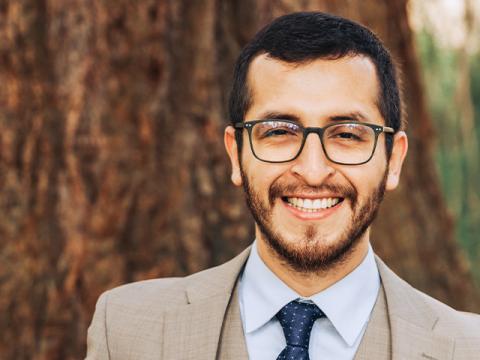
Miguel Arellano Sanchez’s Oregon State journey began in 2008, when he started his studies in human development and family sciences. After earning his bachelor’s degree, he continued along his OSU path, earning a master’s degree in college student services administration. He has worked in the Student Experience and Engagement Center and served as a basic needs navigator for the Basic Needs Center. Now, he’s taking on new challenges and opportunities as assistant director of outreach in the Office of Institutional Diversity. Read on to hear more about his story.
How has your career evolved and changed since first coming to Oregon State?
As a first-generation immigrant that grew up low-income, I became keenly aware — from an early age — of the inequality around us and the negative physical, mental and material manifestations it had on people and communities. Because of this, I always knew I wanted to help people — and shape a better future. It was evident in my academic interest, employment choices, involvement and volunteer opportunities. While what I do professionally has changed, the goal to shape a better future has always remained.
Could you describe your role as assistant director of outreach? What do you hope to accomplish within this role?
There are three main components to my role. The first is supporting bias response efforts as part of the Bias Response Team. The second is leading signature universitywide OID outreach initiatives and events. And lastly, helping to codesign educational programming for faculty, staff and students on diversity learning.
I am really looking forward to collaborating with partners across the university who are making strides in creating a campus, in all its functions, that aligns with our highest aspiration of a welcoming and affirming university. Part of my hope is to recognize, celebrate and amplify the successes and strides that Oregon State is taking to make this vision a reality.
How did your previous role as basic needs coordinator help to lessen student financial stress?
In its essence, my role on campus was to help students access and use available resources to alleviate stress so they may focus on their success in school and life — and less about how they will pay for their rent or other basic necessities. This translated into helping students navigate red tape, policies, appeals and eligibility criteria for community, state and federal resources, but it also included helping students navigate the confusing maze of higher education.
The success I had in this position influenced the passage of HB 2835, a legislative bill that provides funding for basic needs navigators at all public colleges and universities. During the lobbying for the bill, one big appeal to state senators and representatives was the narrative around return on investment. During my time in this role, I helped students access more than a $1.5 million in federal and state resources and helped many avoid unintended breaks in their education due to financial stress. The bill overwhelmingly passed in the Oregon House of Representatives and the Senate.
How can Oregon State create better access and support for traditionally underrepresented students? Is there anything the university is doing well so far?
While we have work to do, I must underscore the great things OSU is doing. Programs like TRIO, Educational Opportunities Programs, College Assistance Migrant Program, Human Service Resource Center, STEM Leaders, Diversity and Cultural Engagement, to name a few, are doing phenomenal work in supporting and creating access for historically marginalized students. The reason these programs are successful is because of their incredibly loving and dedicated staff. They are the key to these programs’ success, and these programs are key to the success of OSU. Successfully providing support and access for students cannot be separated from also doing the same for our marginalized faculty and staff.
As a first-generation Oregon State graduate, what does supporting other first-generation students and watching them succeed mean to you?
Being the first in your family to go to college, often with little financial resources, is not easy. I often feel personally invested in the success of students because I see parts of myself in their journey and struggle.
Higher education was transformative, and if it wasn’t for my mentors, supervisors, and programs like EOP, I am not sure I would have had the same experience. Now I get to play that role for students — and watching them succeed means the world to me!